Written by the Vitrela Australia team · Last updated
Quick answer
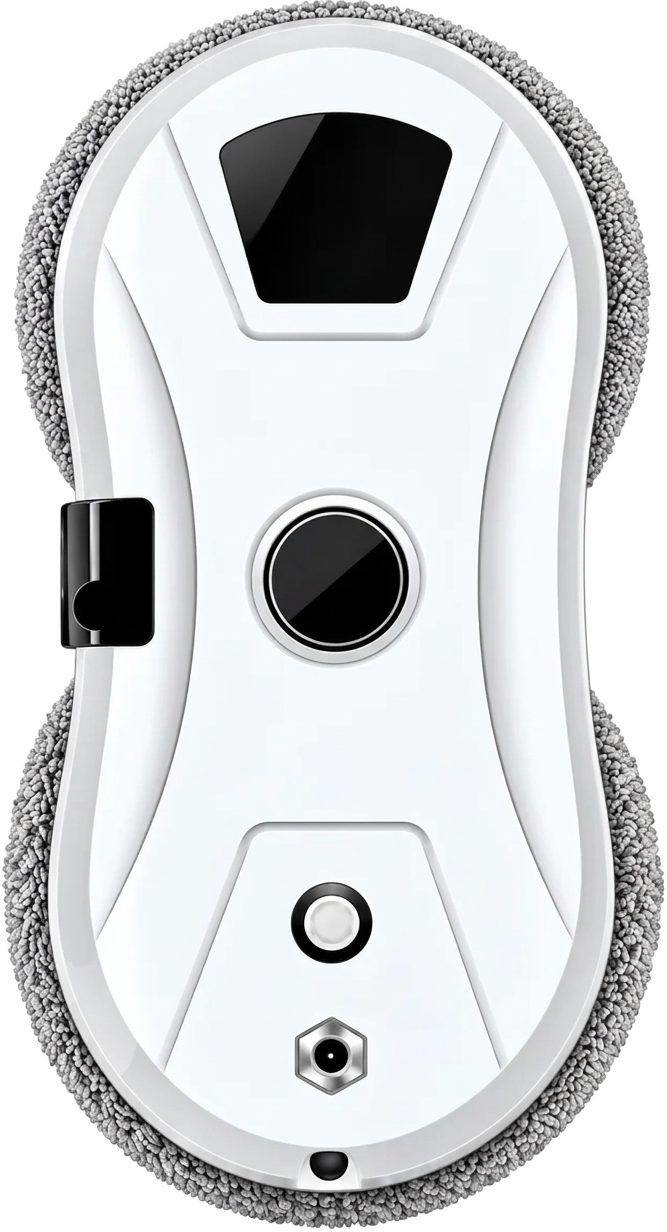
A fan pulls air out from under the robot, creating a vacuum that presses it against the window. Vitrela uses 5600 Pa.
Related: Explore window cleaning robots for Australian homes · Read the Vitrela setup guide · Check Vitrela safety precautions · Understand the robot window cleaner option
Suction keeps it on the glass
A fan pulls air out from under the robot, creating a vacuum that presses it against the window. Vitrela uses 5600 Pa.
Sensors find the edges
Edge sensors detect where the glass ends, so the robot turns before it hits the frame and plans a path across the pane.
Safe for you
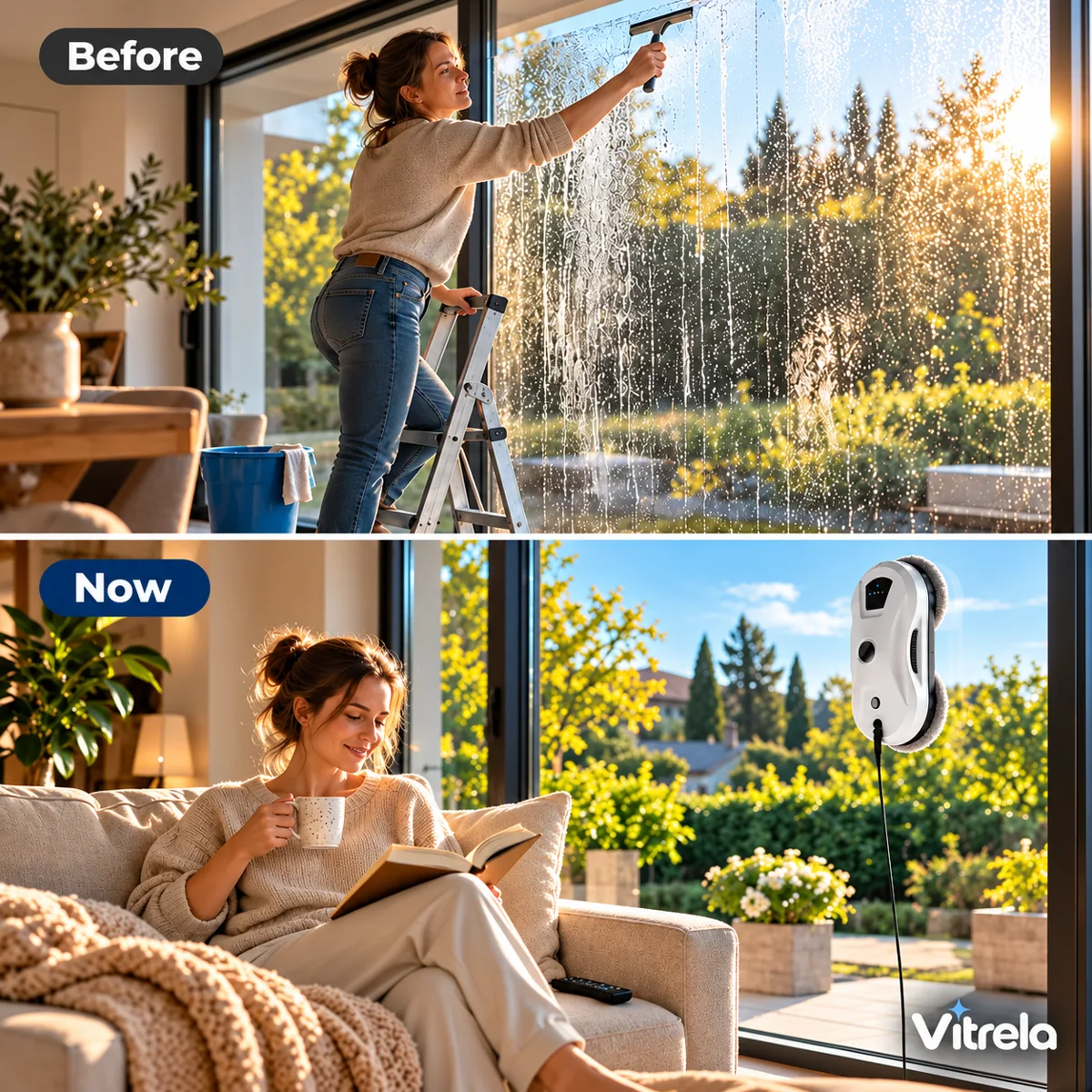
Three layers of safety. Zero ladders.
- 1
5600 Pa suction
Holds firmly on vertical and sloping glass the whole time.
- 2
Backup battery + alarm
If the power cuts out, it keeps holding and beeps to warn you.
- 3
4 m safety rope
Tied off indoors, so it can never drop away from the window.
Spray and pads do the cleaning
A fine spray loosens dirt, then rotating microfibre pads wipe it away.
| Component | Verified Vitrela detail | Do not assume |
|---|---|---|
| Attachment | 5600 Pa suction | Suitability for every material or angle |
| Spray | Ultrasonic spray and 35 ml tank | A fixed coverage per fill |
| Cleaning surface | Rotating washable microfibre pads | Permanent removal of every stain |
| Boundary sensing | Edge sensors that detect frames | Confirmed frameless compatibility |
| Backup | Battery with power-loss alarm | Cordless cleaning or a stated reserve duration |
Safety backups
Good robots add a backup battery and a safety rope in case the power fails. Vitrela has both.
Think of the robot as one part of a cleaning system
A window robot combines attachment, movement and wiping in a compact device, but it still operates within a system that includes the glass, the power supply and the person setting it up. Understanding those relationships is more useful than expecting a miniature professional cleaner. The machine can take on repeated pad movement; it cannot decide whether your window opening is safe to work through or whether a coating needs specialist care.
Start by separating three jobs: removing loose contamination, wiping the main surface and finishing awkward details. A robot may help with the middle task on compatible glass. Frames, tracks and individual stubborn spots can need separate attention. This distinction prevents disappointment and makes it easier to compare automation with a simple washer and squeegee. It also explains why a lightly dusty sliding door and a neglected exterior pane may need different preparation, even when the same robot is used. Decide what needs cleaning before deciding how much of it to automate.
Understand attachment without treating suction as a guarantee
Suction attachment relies on maintaining a pressure difference against a suitable surface. The quality and condition of that surface therefore matter. A rough texture, damage or contamination can change the working conditions. Vitrela's verified suction specification is 5600 Pa, but that figure alone does not establish that a particular pane, installation position or access arrangement is appropriate.
Use only smooth, flat glass inside or outside within the product instructions. Vitrela is not for frosted or textured glass or very small panes. Do not infer suitability for curved glass, roof glazing or other materials from a suction number. Check with the supplier if the intended application falls outside the confirmed use. Before a session, inspect accessible glass and the device as directed. Keep safety precautions in place even when attachment appears firm. A successful previous clean is not a reason to ignore a damaged pad, a changed window condition or a new obstacle in the work area.
Separate frame detection from human judgement
Vitrela has edge sensors that detect frames. This helps explain how the device responds to the boundaries around its working area, but it does not mean it understands your home as a person does. Sensors do not assess whether a child might open a sliding door, whether a cable crosses a walkway or whether the outside area below is clear.
Before cleaning, examine the pane layout. Decorative bars, handles, seals and unusual openings are reasons to consult the operating instructions rather than assume the device will negotiate every detail. Do not take frame detection as confirmation of suitability for frameless glass. Keep the work area stable and avoid moving the window during use. Human supervision bridges the gap between a machine responding to glass boundaries and a household that changes around it. That supervision should be from a safe position, without touching or adjusting moving equipment contrary to the instructions. If the behaviour seems abnormal, follow the recommended stop and recovery process instead of improvising.
Follow the dirt from the glass into the pads
Cleaning requires dirt to go somewhere. With Vitrela, ultrasonic spray and rotating washable microfibre pads work together on the glass, using a 35 ml water tank. The important practical point is that the pads collect contamination. Once they are dirty, continued wiping may spread residue. Inspect, replace or wash them as directed rather than judging readiness only by how much water remains.
The tank capacity is a specification, not a promise of a fixed number of windows per fill. Pane size, starting condition and permitted operating settings affect the task, so avoid assuming a coverage figure that has not been confirmed. Follow the instructions for filling and approved liquids. Do not pour a favourite hand-cleaning solution into a powered sprayer without checking compatibility. Let dirty washable pads receive the appropriate care before storing them. A small supply of clean manual cloths is still useful for accessible edges and frames, keeping that dirt separate from the robot's main cleaning surfaces.
Distinguish backup protection from cordless operation
Vitrela includes a power cable and a backup battery that sounds an alarm if power cuts out. The backup battery is a safety feature, not a cordless mode, so keep the robot plugged in while it cleans. Read what to do if the alarm sounds before your first clean.
The supplied 4 m safety rope is another precaution, not an extension of your safe reach. Secure it using the instructed method and confirm you can retrieve the device without leaning outside. Keep the cable managed so doors cannot pinch it and people cannot trip over it. Do not leave electrical connections exposed to wash water or weather. If the available power arrangement or securing position is unsuitable, change the plan. Professional cleaning may be the appropriate answer. Multiple precautions are valuable because no single feature replaces thoughtful setup, a suitable surface and a controlled area beneath exterior work.
Compare an automated session with a manual session
For a manual clean on reachable glass, a soft washer lifts dirt and a squeegee removes the dirty water. You provide the pressure, movement and judgement throughout. Prepare the frame, wet a manageable section, make overlapping squeegee passes and dry the accessible edges. This remains a useful, inexpensive method when the pane is easy to reach and the work is comfortable.
A robot session shifts some of that repetitive motion to the device, while adding setup, power management and movement between panes. Check suitability, prepare the surface as instructed, organise the rope and cable, and follow the placement and retrieval procedure. Do not improvise a dry or wet operating mode from generic online advice. A house with many tiny panes may have more changeovers than useful automated wiping; a few large compatible panes may offer a better fit. Neither method automatically solves inaccessible exterior access. The most helpful comparison includes your complete routine, not just the minutes when the pads are moving.
Allow for Australian homes and changing conditions
Large sliding doors are a useful example of why automation can be appealing: repeated hand wiping across a broad area can be tiring. Yet Australian homes also have security screens, older window hardware, textured bathroom glazing and openings with restrictors. Check each pane rather than treating the whole house as one compatible surface. Do not remove safety hardware to make a robot fit.
Local conditions affect preparation. Coastal deposits may need a gentle preliminary clean, while dusty inland windows can soil pads quickly. On hot days, work on cool, shaded glass within the operating instructions. Avoid exterior operation in wind, rain or storms, and consider the consequences of anything falling below an apartment window. Building rules may restrict external equipment even when the glass itself is suitable. A ground-floor trial on a readily accessible pane is a sensible way to learn the handling routine before considering other locations. Learning how to stop and retrieve the device matters as much as learning how to begin.
Judge the result and maintain the whole kit
After a session, inspect the dry glass from a safe position. Note whether remaining marks are along accessible edges, in isolated greasy patches or spread across the pane. Those patterns can suggest a finishing task, preparation issue or dirty pads. Do not assume every mark means the machine needs more liquid or stronger pressure. Persistent deposits and damaged glazing require their own assessment.
Follow the care instructions for the robot, pads and spray components, and store everything clean and dry as directed. Keep the rope and cable with the unit so safety setup does not become an optional extra next time. If the result is unsatisfactory, change one appropriate variable at a time and use an easy, accessible test pane. A robot is most useful when it fits a realistic routine: compatible surfaces, manageable setup, clean consumables and sensible expectations. The aim is to reduce repetitive work, not to eliminate the need for attention or turn difficult access into an automatically safe job.
Common questions
Does 5600 Pa tell me how quickly a pane will be cleaned?
No. Suction describes attachment pressure, not a confirmed cleaning speed. Do not infer runtime, coverage or finishing quality from that number alone.
Are edge sensors the same as a camera?
Frame-detecting edge sensors do not establish that a camera is fitted. Vitrela has verified edge sensors; no camera or visual mapping capability is claimed here.
Can the backup battery replace the power cable?
Do not treat the backup as a cordless operating supply. Vitrela has a power cable and a backup battery with a power-loss alarm. Follow its instructions if power is interrupted.
How many panes will the 35 ml tank cover?
There is no verified pane-count figure to give. Use the filling and operation instructions and assess your own window sizes rather than relying on an invented coverage estimate.
Does frame detection mean frameless glass is supported?
No. Detecting frames is not confirmation of frameless compatibility. Ask the supplier about any intended use beyond the confirmed smooth, flat glass application.
Why do I still need manual cloths?
Frames, sills and accessible finishing spots can need separate attention. Dedicated cloths also help keep frame dirt away from the pads used on the main pane.
Our 30-day promise
Love it, or your money back. Fair dinkum.
Use Vitrela at home for 30 days. If you're not happy, we'll refund you in full.
- Full refund, no fuss
- Australian-based support by email
- On top of your rights under Australian Consumer Law
Ready for clear windows without the ladder?
Free shipping Australia-wide · 30-day money-back guarantee
Get Vitrela now