
Written by the Vitrela Australia team · Last updated
Quick answer
Falls from ladders send thousands of Australians to hospital every year. Poles and robots keep your feet on the ground.
Related: Explore window cleaning robots for Australian homes · Read the Vitrela setup guide · Check Vitrela safety precautions · Understand the robot window cleaner option
Step by step
- 1Choose a mild, overcast day so the glass doesn't dry too fast.
- 2Rinse heavy dirt and bird droppings off first.
- 3For reachable windows, use a squeegee on an extension pole.
- 4For high or apartment windows, use a window cleaning robot with a safety rope tied off indoors.
- 5Finish with a microfibre cloth on the edges.
Avoid ladders where you can
Falls from ladders send thousands of Australians to hospital every year. Poles and robots keep your feet on the ground.
The robot option
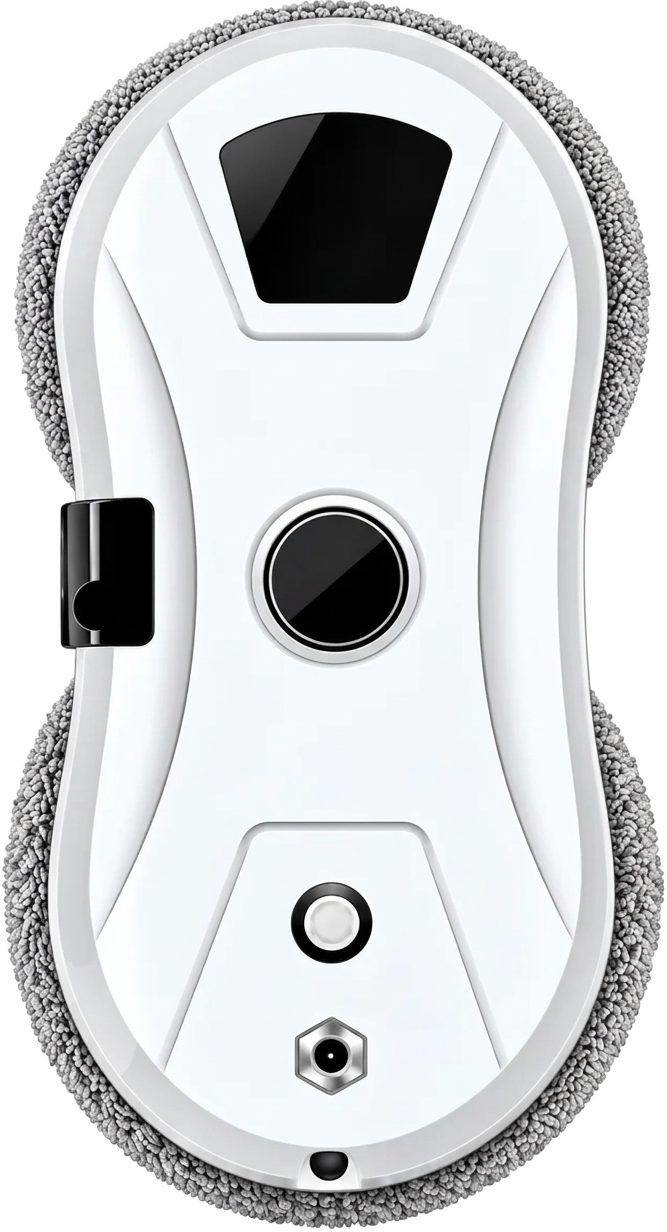
Vitrela cleans the outside of a window from indoors. Vitrela holds on with 5600 Pa of suction, has a backup battery that sounds an alarm if power cuts out, and a 4 m safety rope you tie off indoors.
Safe for you
Three layers of safety. Zero ladders.
- 1
5600 Pa suction
Holds firmly on vertical and sloping glass the whole time.
- 2
Backup battery + alarm
If the power cuts out, it keeps holding and beeps to warn you.
- 3
4 m safety rope
Tied off indoors, so it can never drop away from the window.
Start with a reach and access assessment
Walk around the house before filling a bucket. Identify which panes you can clean while standing comfortably on firm, level ground, which are reachable with a manageable pole, and which have no safe household access. Include the return journey: being able to touch a pane does not mean you can control a tool or retrieve a machine from it safely.
Look for cracked glass, loose frames, overhead electrical lines, uneven paving and garden beds that would force an awkward stance. Keep doors used by children and pets out of the work area. For upstairs windows, assess access from indoors without opening restrictors beyond their intended travel. If placement would require leaning your shoulders outside, stop. A professional is a sensible choice for inaccessible glass, not a last resort after trying something risky. Decide your method pane by pane rather than assuming one tool will suit the whole property. Leave uncertain windows off today's cleaning list.
| Method | Best fit | Important limitation |
|---|---|---|
| Hand washer and squeegee | Reachable ground-level panes | Requires controlled access to the whole pane |
| Extension pole | Glass reachable from stable ground | Stop when length compromises control |
| Compatible robot | Accessible smooth, flat panes | Needs safe placement, securing and retrieval |
| Professional service | Difficult exterior access | Discuss site conditions and obtain a quote |
Assemble a small, controllable cleaning kit
For reachable exterior glass, gather a bucket, a soft washer, a sound rubber squeegee, clean microfibre cloths and a suitable extension pole. Use a mild cleaner approved for the glass and follow its dilution instructions. A stronger mixture is not automatically more effective and can leave residue that needs extra rinsing. Keep a separate cloth for dirty sills so grit does not migrate onto the pane.
Check that the pole connections lock properly and that the head stays secure under gentle pressure. Choose a length you can control without raising your shoulders or bending backwards. Wear enclosed, grippy footwear, and position the bucket where you cannot trip over it. Do not improvise extra reach by standing on chairs, stacked pavers or balcony furniture. If you need several trips for fresh cloths, that is preferable to balancing an overloaded bucket and multiple tools. Keep electrical equipment and its connections well away from wash water throughout the job.
Use a gentle ground-level washing sequence
Begin with the frame and sill, removing loose debris with a soft brush or cloth. On sound, accessible glass, loosen ordinary dirt with your damp washer before making controlled passes across the pane. Avoid dragging a dry cloth through gritty deposits. Where a gentle rinse is suitable, direct water away from openings and seals rather than forcing it into the window assembly.
Clean a manageable area at a time, working from the upper part down. Draw the squeegee across with light, even pressure, wiping its blade between passes. Catch the drips at the lower frame with your separate sill cloth. With an extension pole, keep movements slow and stop if the tool becomes difficult to control. It is better to accept an imperfect top corner than overreach for it. Check the finish after the surface dries before repeating the entire wash; a single missed strip may only need a small local touch-up with a clean cloth.
Plan for Australian heat, dust and coastal exposure
Choose the shaded side of the house first and follow the shade as it moves. Australian summer sunshine can heat glass even when the air feels comfortable. A cleaning solution that dries before you remove it can leave marks, tempting you into repeated scrubbing. Work during a milder part of the day and postpone the task if the glass or working area feels uncomfortably hot.
Near the coast, lift salt deposits with a gentle wet clean rather than rubbing them around with a dry pad. In dusty areas, replace the wash water when it becomes visibly dirty instead of transferring suspended grit to the next pane. After storms, inspect for damaged frames and branches before starting. Avoid outdoor work in gusts, rain or approaching storms, especially when poles or powered equipment are involved. There is no universal cleaning interval for every postcode: visible buildup, safe access and the conditions at your particular home are better guides than a rigid calendar.
Treat ladders and improvised reach as separate risks
A window that is only slightly out of reach can still invite a bad decision. Stretching sideways, standing on a top step or moving a ladder with tools in your hands makes an ordinary cleaning task much harder to control. This guide does not recommend a ladder as the default solution. Ground-based tools or a qualified window cleaner may remove the need for one entirely.
If ladder work is being considered, obtain appropriate guidance for the equipment and circumstances rather than relying on a short cleaning checklist. Do not work above doorways or paths where someone could walk underneath. Never step onto an outside sill, climb a balcony barrier or use a roof as a cleaning platform. These boundaries matter even for a quick spot clean. Ask a professional how they will access the glass, manage the area below and protect your property. The objective is safe access, not simply reaching the highest possible pane with whatever happens to be available.
Decide whether a robot is genuinely accessible
A robot can reduce repetitive wiping on suitable exterior glass, but somebody still needs to place it, secure it, supervise it and retrieve it. Vitrela works on smooth, flat glass inside and out; it is not for frosted or textured glass or very small panes. Assess those limits before thinking about convenience. An opening window alone does not establish that its exterior face is safely accessible.
Vitrela has 5600 Pa suction, edge sensors that detect frames, ultrasonic spray, a 35 ml tank and rotating washable microfibre pads. Its backup battery sounds an alarm if power cuts out, and a 4 m safety rope is supplied alongside a power cable. Follow the instructions for attachment, power and rope securing. Neither the suction figure nor the rope makes leaning outside acceptable. If you cannot manage the complete setup and recovery from a protected position, leave that pane for professional cleaning. Do not operate above people or an uncontrolled public area.
Avoid shortcuts that damage glass or create extra work
Dried bird droppings and stubborn deposits need patience, not a metal scraper chosen from the toolbox. Soften accessible dirt using a suitable wet method and check the glazing supplier's advice before using specialist products. Films, coatings and tinted glass can have different cleaning requirements. Do not assume that an abrasive pad, strong solvent or acidic household mixture is appropriate simply because it worked on another surface.
Another common mistake is using a pressure washer to compensate for poor access. High-pressure spray can drive water towards seals and openings; it is not a substitute for a planned window-cleaning method. Avoid mixing cleaning chemicals, and keep products in their labelled containers. When using powered tools, never handle plugs with wet hands or leave connections in puddles. Stop when weather changes or your arms become tired. Fatigue often shows up first as harder pressing, uncontrolled pole movements or reaching farther than you intended. Leaving the final window until another day is a good decision.
Finish with a repeatable maintenance plan
Once the glass is dry, inspect it from indoors and outdoors where access is safe. Record any failed seals, persistent cloudy areas or damage rather than repeatedly scrubbing the same patch. Cloudiness within a glazed unit is not surface dirt that a better cloth will remove. Clean and dry your kit before storing it, and wash microfibre separately from heavily soiled household items.
For the next clean, divide the property into straightforward household panes and specialist-access panes. A mixed approach often works well: a squeegee for low windows, a compatible robot for accessible larger panes and a professional for difficult external faces. Keep a simple note of which windows were awkward and why. For older family members, arranging help with setup or booking a service can be more useful than buying a longer pole. A sustainable routine should leave you with cleaner glass and enough energy for the rest of the day, without depending on balancing, stretching or rushing.
Common questions
Can I clean an upstairs window by reaching through the opening?
Only consider work that stays within a protected indoor position. If your upper body must lean outside, or you cannot retrieve the tool safely, arrange professional access instead.
Should I remove flyscreens before washing?
Remove them only when the design allows safe removal from your position. Follow the window instructions, label removable screens and never force a screen out over an uncontrolled drop.
Is a garden hose enough for dusty glass?
A gentle rinse can loosen some dirt on suitable, sound windows, but it may leave water spots. Keep water away from openings and follow with a controlled wash where accessible.
What should I do about a cracked exterior pane?
Leave it alone and organise a glazing assessment. Do not press a washer, pole or suction device onto damaged glass, even if the crack seems small.
Can a family member hold my safety rope?
Use the securing method required by the product instructions, not a person acting as an improvised anchor. If there is no suitable securing arrangement, do not proceed.
When is professional cleaning the better option?
Choose professional help for inaccessible exterior faces, difficult drops, unsafe ground conditions or any setup that requires overreaching. Ask about the access method and obtain a quote for your property.
Our 30-day promise
Love it, or your money back. Fair dinkum.
Use Vitrela at home for 30 days. If you're not happy, we'll refund you in full.
- Full refund, no fuss
- Australian-based support by email
- On top of your rights under Australian Consumer Law
Ready for clear windows without the ladder?
Free shipping Australia-wide · 30-day money-back guarantee
Get Vitrela now